Cristine Hall

Chapman University undergraduates are examining government distrust, wildfire misinformation, and disaster preparedness using data from the 2026 Chapman University Survey of American Fears.
Working with faculty and fellow students, Robin Nakamura ’27, Charlotte Iribarren ’28, and Suzanne Cibrowski ’29 are learning to analyze data, ask questions, and connect findings to issues they care about. Their experiences show how undergraduate research opportunities at Chapman can help students pursue their interests and prepare for careers and life after graduation.
Robin Nakamura: Understanding Fear and Community
Nakamura, a senior from Honolulu, was struck by survey responses about the government concealing information on directed-energy weapons. She connected the finding to conspiracy theories linking such weapons to the Lahaina wildfires, questioning why a tragedy she expected to unite people had prompted suspicion.
A political science and peace and justice studies double major, Nakamura considers how the findings relate to her home community, including trust in local officials and participation in elections. Undergraduate research is teaching her to examine connections among people’s perceptions, emotions, and behavior.
“My biggest career aspiration is just to go home and do work within my community,” Nakamura said.

Charlotte Iribarren: Examining Distrust of Government
Iribarren was surprised by the persistence of Americans’ fear of corrupt government officials. She wonders what sustains that fear and whether skepticism expressed by officials themselves contributes to it.
Iribarren, a junior from Alamo, California, is a philosophy and political science double major with a minor in the University Honors Program. Working one-on-one with faculty has helped her analyze data, identify gaps in scholarship, and gain confidence in her findings.
“The opportunity to be an undergraduate student researcher has been life-changing for me,” said Iribarren, who plans to pursue a doctorate. “It gives you an opportunity to be intellectually independent and contribute to the field in a way that you’re not really able to do inside the classroom.”
Suzanne Cibrowski: Investigating Wildfire Misinformation
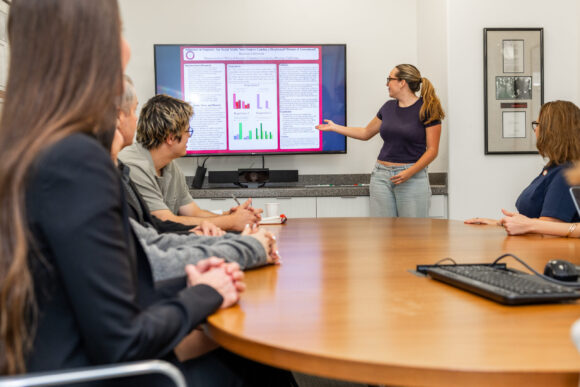
Cibrowski is using fear survey data in a faculty research project examining wildfire misinformation, how people prepare for wildfires, and where they get information.
Cibrowski, a sophomore from New York, is a political science major with an art history minor. She hopes to enter law and sees research as preparation for analyzing evidence and identifying relationships between findings. Working with new data also gives her opportunities to compare ideas with students and professors.
“I love collaborating with students and professors on trying to kind of figure out that data and find things that might stand out to us,” Cibrowski said.
Frequently Asked Questions
What is undergraduate research and why is it important?
Undergraduate research gives college students experience investigating questions and developing new ideas with faculty guidance. At Chapman, students across majors can join faculty projects or pursue their own, exploring their interests while preparing for careers or graduate school.
How can I find undergraduate research opportunities at Chapman?
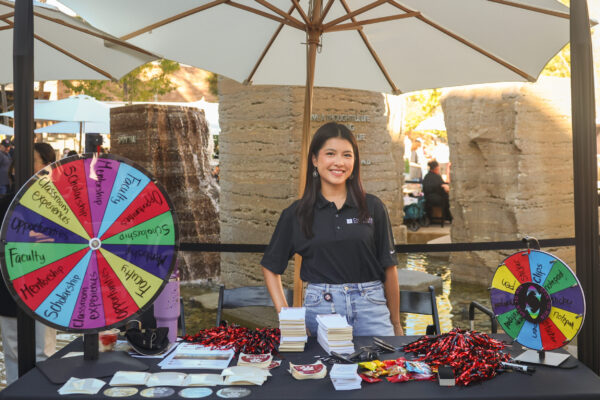
Start with Chapman’s Center for Undergraduate Excellence, which offers advising, a faculty mentor directory, and research events. Talk with professors whose work interests you, and explore the center’s Student Toolkit for getting involved.
Are undergraduate research positions typically paid?
Pay depends on the opportunity. Chapman’s Summer Undergraduate Research Fellowship, for example, provides a $4,200 fellowship for eight weeks of faculty-mentored research or creative work. Student’s most commonly pursue research for academic credit through the 29/491 course. Ask about funding and credit when exploring a project.
What skills can I gain from participating in undergraduate research?
Undergraduate research helps students think critically, analyze evidence, solve problems, and communicate findings. Working with faculty and fellow students also builds collaboration skills: sharing ideas, listening to different perspectives, giving and receiving feedback, and working toward shared goals.
Do I need research experience to participate in undergraduate research projects?
No, you do not need research experience to participate in undergraduate research projects. Most faculty will provide disciplinary training to get you up to speed, although requirements and time commitments vary by project. Chapman offers research opportunities across majors, with faculty mentorship and support from the Center for Undergraduate Excellence. A good first step is to discuss your interests, experience, and schedule with a potential faculty mentor.