Paul Pe
When Will Basnight ’27 arrived at Chapman University, the political science major didn’t know undergraduate research could become part of his college experience. Then Ann Gordon, Ph.D., director of the Ludie & David C. Henley Social Sciences Laboratory, encouraged him to explore opportunities beyond the classroom.
“Dr. Gordon continues to open doors for me,” Basnight said. “That’s the biggest thing I say to incoming students: Do well in your classes. That’s great. Get to know your professors. Because your professors have the keys to doors you don’t even know are there.”
This summer, Basnight found himself opening one of those doors for someone else.
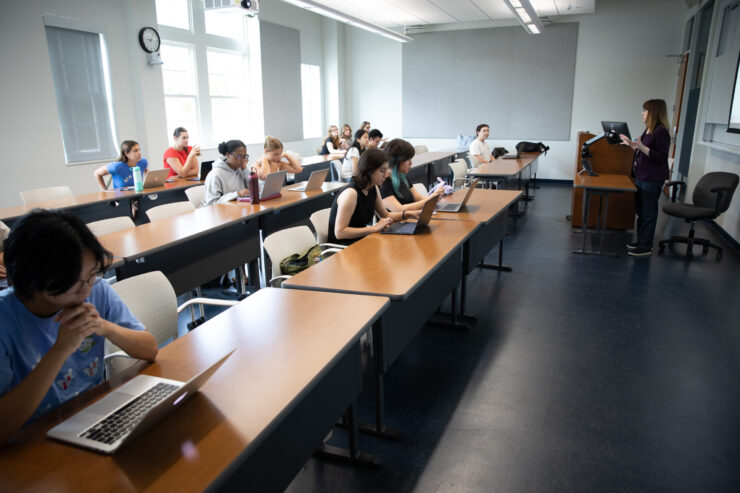
As a mentor in the Henley Research Lab’s three-week Social Science Summer Pre-College Research Experience, he worked with Gordon and Karen Snedker, Ph.D., associate professor of sociology and associate dean for Student and Faculty Advancement, to guide high school students through the research process. The students turned questions into projects using data from the Chapman Survey of American Fears, an annual nationwide study of Americans’ fears and how they relate to attitudes and behavior.
In doing so, Basnight passed on something central to his own Chapman experience: the confidence and opportunities fostered by close faculty mentorship.
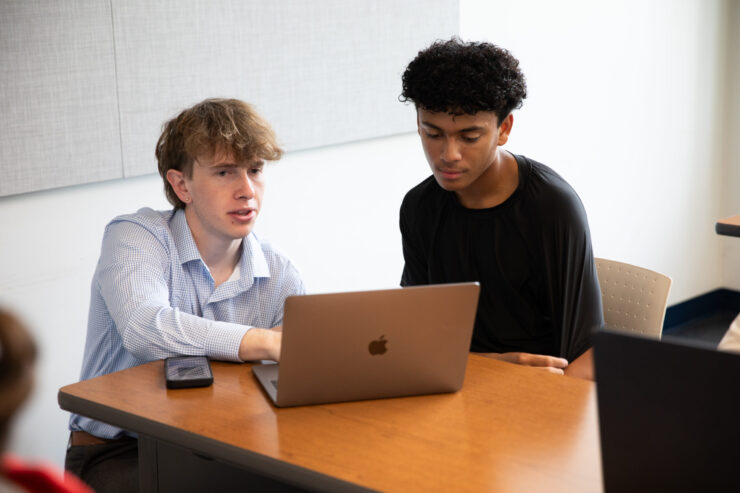
“Guiding someone else through a research project deepens an undergraduate’s understanding of the research process and strengthens their ability to communicate complex ideas,” said Gordon, an associate professor of political science. “It also helps them begin to see themselves not only as researchers, but as leaders.”
Mentorship also took place among the undergraduates as they drew on one another’s experience in the Henley Lab.
“It’s kind of peer mentoring for me, because [my fellow mentors] have a little bit more experience,” said Taylor Courtney ’27, a sociology major. “It’s been really helpful to get their input and then also take that and teach it to kids younger than me.”
Mentoring high school students helped Courtney sharpen the data-analysis skills she was using in her eight-week Summer Undergraduate Research Fellowship project. Her work in the Henley Lab with Snedker drew her toward criminology and criminal justice, which she hopes to pursue in graduate school.
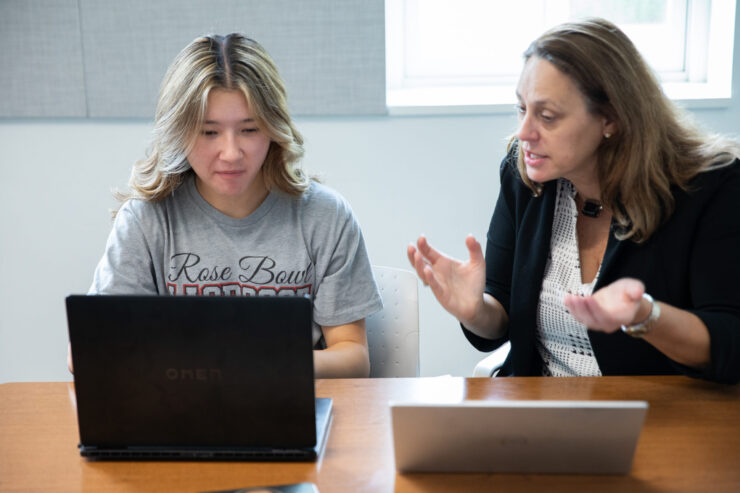
The program offered Myles Agatep, a recent Los Alamitos High School graduate, an early look at the opportunities available to him at Chapman. This fall, he will begin his first year as a political science major and minor in the University Honors Program.
“I think the research itself is really an exercise in trying new things and seeing what works for you,” Agatep said. “I’d like to do undergraduate research because I think it is such a valuable experience.”
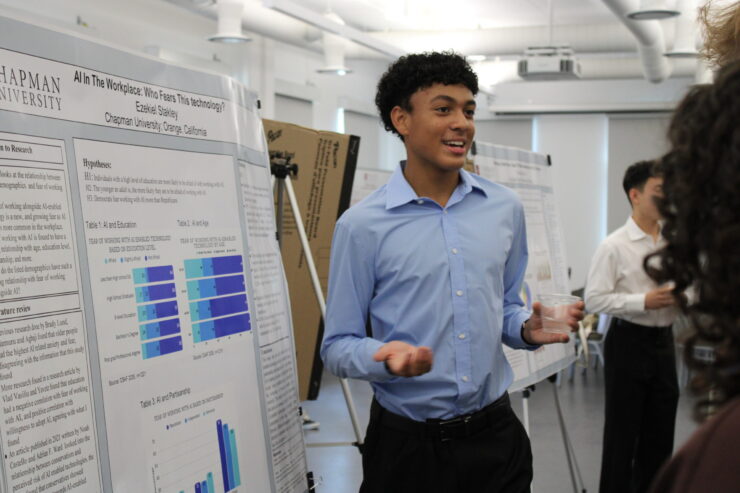
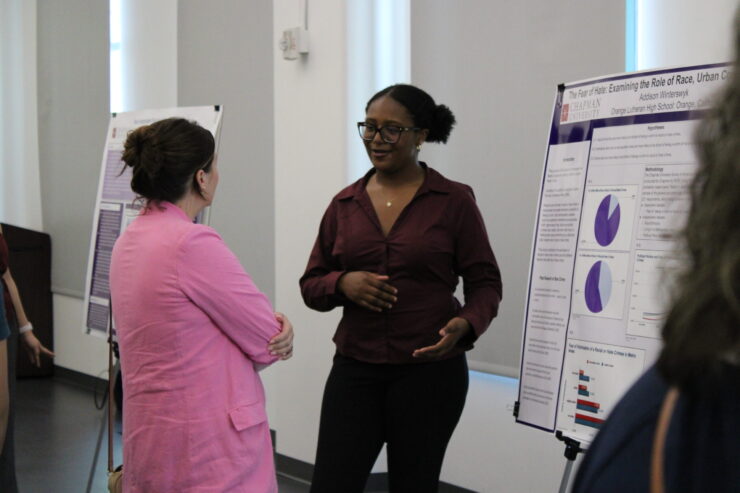
The three-week program concluded with poster presentations of research projects the high school students developed using Chapman Survey of American Fears data. Along the way, they gained experience analyzing data, communicating their ideas, and presenting their findings in a symposium to the public.
For Basnight, helping students reach that point was a chance to extend the kind of support that shaped his own Chapman journey.
“It’s really about giving them the same opportunity,” he said. “I want to answer every question they have and make them as excited to keep going as I was.”
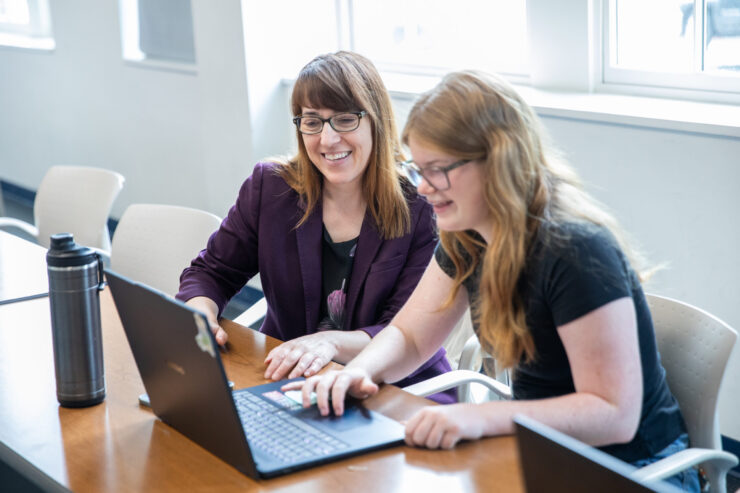
Mentoring high schoolers helps undergraduates strengthen their communication and research skills, said Ann Gordon, left, director of the Henley Lab.
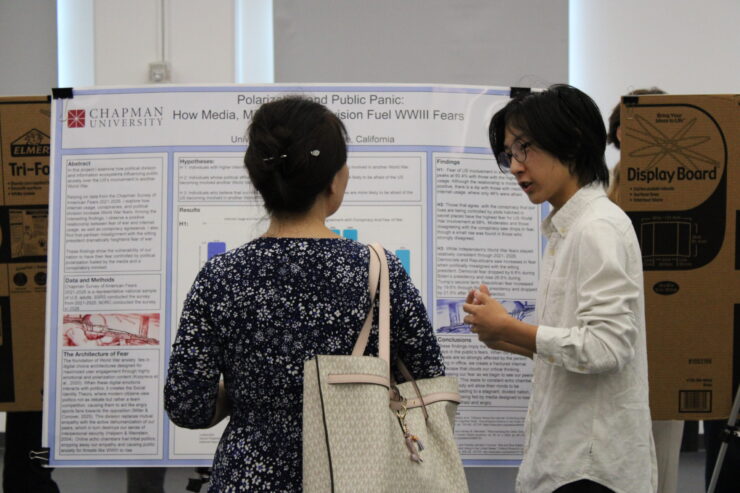
The three-week program culminated with a symposium where high school students presented their research to the public.
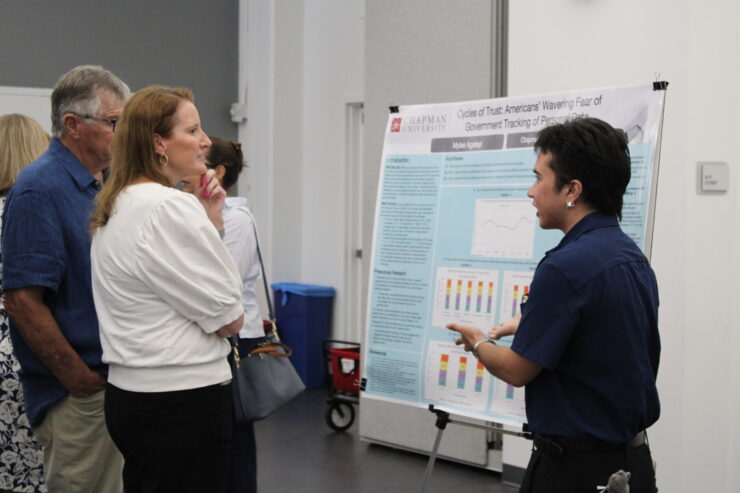
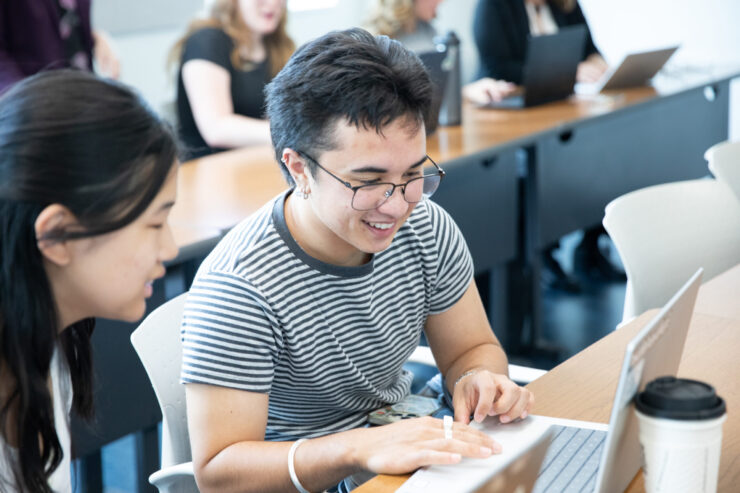
Myles Agatep, right, an incoming first-year student, said the program gave him an early look at opportunities available to him at Chapman.