Nicole Bigley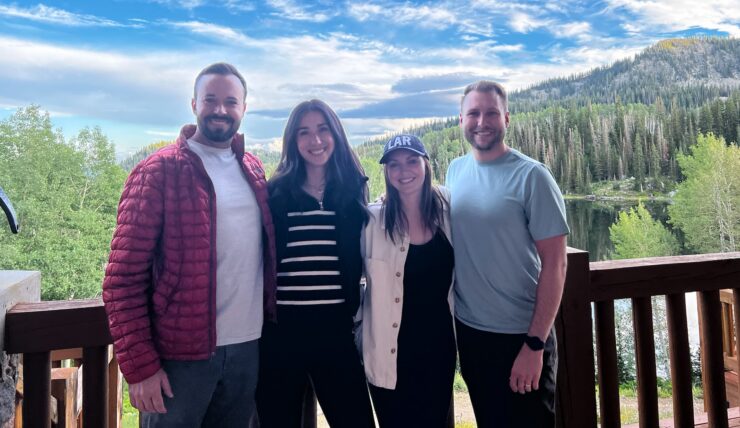
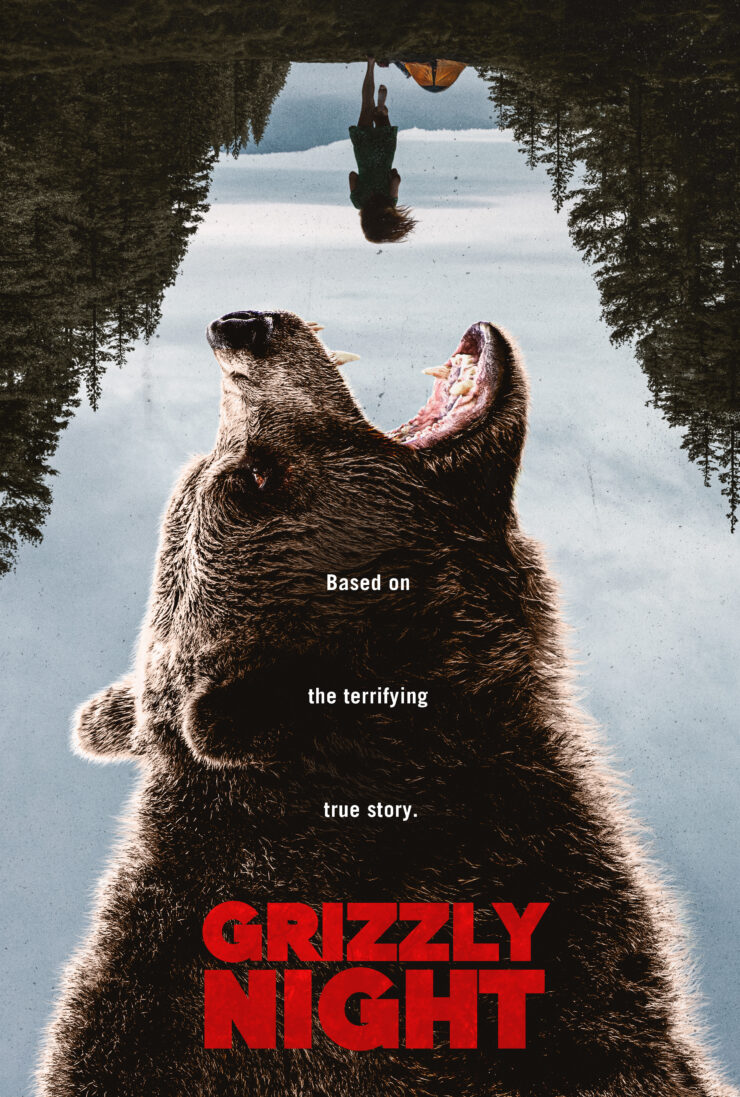
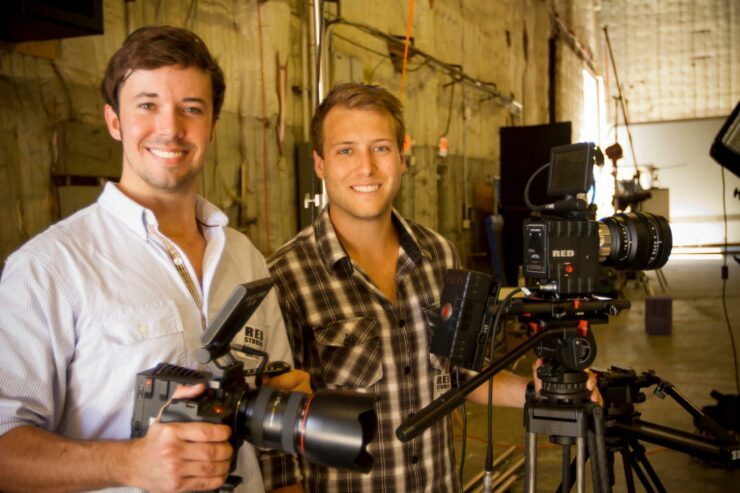
Fourteen years after graduation, two Chapman University couples are proving that the connections made in Dodge College of Film and Media Arts classrooms can lead to extraordinary creative partnerships. Burke ’12 and Kellie ’12 Doeren, alongside Tyson ’12 and Lauren ’12 Call, released their first feature film together, “Grizzly Night,” on Jan. 30 on Apple TV, Amazon, and major streaming platforms.
Based on a harrowing true story of 1967 grizzly bear attacks, “Grizzly Night” is an ambitious debut made possible by determination and the strength of the Chapman network.
The Chapman Network in Action
What sets this production apart is how deeply the Chapman network supported it. Travis Knox, professor at Dodge College, became a mentor to the core four throughout the project, despite not having taught them as students. He identified where they needed expertise beyond their friend group, leading four more Chapman alumni to the project.
“Even beyond being a student at Chapman, the network and passion and drive within the alumni network is invaluable,” the team shared.
Those connections brought seasoned professionals onto the project: Chelsea Fenton (MFA ’15) served as line producer, Katrina Mathewson ’11 as lead writer, Steve Lundgren ’12 as lighting director, Michael Vlamis ’12 as a supporting actor, and Thomas Galyon ’08 as senior colorist.
Knox also guided the core four through production and distribution challenges. For first-time feature filmmakers, this mentorship proved essential.
Facing New Challenges
“We all believed if we’re going for it, we’re going all in,” the team shared, reflecting on their ambitious approach to the project. And go for it, they did.
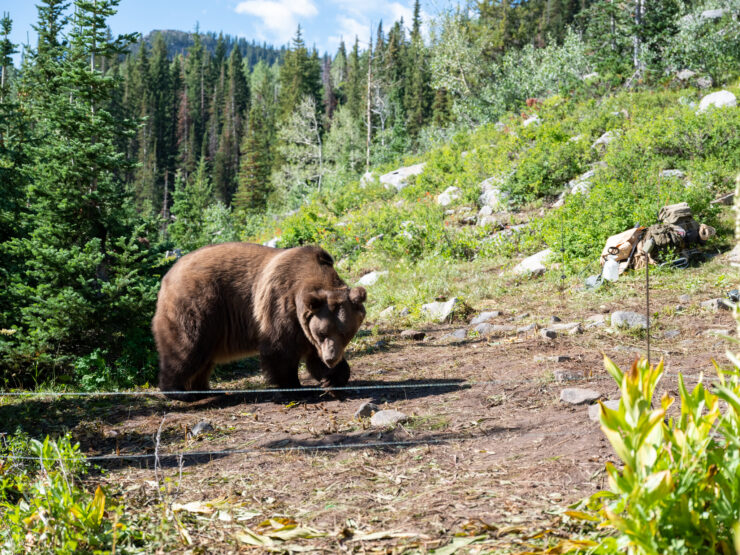
Their adaptation required working with children, dogs, helicopters, and, most notably, a trained grizzly bear. Securing the bear became one of the production’s greatest hurdles, but it also delivered an unexpected breakthrough: its involvement helped the team secure a SAG waiver just three days before a looming strike deadline would have shut the production down entirely.
Location scouting led the filmmakers to a remote property near Park City, Utah, at an elevation of 9,200 feet. Rapidly shifting weather frequently forced filming indoors, and only two days before shooting, they discovered the original helicopter couldn’t land at that elevation and had to secure a replacement. The team quickly adapted to the last-minute change.
The first day of their tight 22-day shoot proved especially grueling with 30 extras, limited child-actor work hours, the bear, and a full production load converged at once. The team pushed forward.
Dodge College Preparation Pays Off
The filmmakers credit Dodge College with preparing them for exactly these kinds of challenges.
“Dodge was very hands-on,” they noted. Tyson recalled touring Chapman and seeing the Gold Room, realizing he would have access to professional-grade equipment early in his college career. Lauren described feeling “overprepared for a professional career” when she went to her first set after Chapman.
For Kellie, her time at Chapman revealed a passion for producing. “Classes teach you to problem-solve very efficiently,” she said. “Producers need neutral heads, and working with different people at Chapman teaches you how to navigate that.”
Burke reflected on the freedom to experiment during college. “It’s easier to experiment and get friends together to work—much harder after.”
Built on Trust and Teamwork
Beyond the technical achievement, the team is most proud of how they supported one another throughout the process.
“We were kind of naive about the difficulty,” Tyson admitted. “I’m extremely proud that we saw it all the way through.”
Burke, who first read the script four years ago, reflected on the learning process. “We learned new things consistently. Seeing the film on Apple TV next to other major releases felt surreal. Hopefully the world resonates with the story like I do.”
Lauren highlighted the unwavering support: “There were opportunities to steer away from the core crew, but everyone had our backs. All four of us showed up for each other, and the rest of the crew felt they were in good hands.” Chelsea, who has worked on multiple features, noted that leadership set the tone. “The vibe starts at the top,” she said. “Working with bears, helicopters, and everything in between was a challenge, but I was thankful to be part of it.”
For Kellie, the experience was especially intense. While managing the Doerens’ production company, she also welcomed two children during the life of the project. “I wrapped a commercial shoot and flew straight to set,” she recalled.
Advice for Current Students
Build relationships early and show up fully.
Tyson and Lauren emphasize that career momentum often begins long before graduation.
“Work on any project at Chapman while you can,” Tyson urges. “It’s about meeting people and making connections. If you have good work ethic, you might get a call in the future.”
Lauren echoes the sentiment, noting that opportunities often come from attitude rather than experience. “Be the person everyone wants to see all day, every day, with little sleep,” she says. “Say yes to everything early, then ask for what you’re worth later.”
Chelsea, now in a hiring position, always looks to hire Chapman alumni first. “Eagerness and attitude come above experience. We want people open to learning and great to work with.”
Experiment while you can.
For Burke, college is the ideal time to explore different creative roles. “Gain as many skill sets as you can while you’re in school and in your first few years,” he says. Looking back, he wished he had branched out more into production design at Chapman. “Even when it takes more time or effort,” he adds, “doing things yourself brings authenticity to the final product. That pride shows on screen.”
Shadow the role you want.
Kellie encourages students to think strategically about their first jobs, and to be the assistant to the future role they want. Her career began as an assistant to an executive producer. She also recommends “taking all classes available to you, even if you don’t think they’ll be beneficial. You never know if that skillset will help you later.” Because of her broad coursework, she brought abilities well beyond her major, making her an invaluable, go-getter assistant. Within three years, she had developed the skill set of an associate producer.
What’s Next
Lauren and Tyson operate a studio in Salt Lake City, where they continue to bring filmmaking opportunities to the region. Kellie and Burke are returning their focus full-time to their production studio in Los Angeles.
And while each couple has exciting projects ahead, we might see a future collaboration if the right opportunity comes their way. Proof that the Chapman network lasts far beyond graduation.