Arturo Gomez Molina
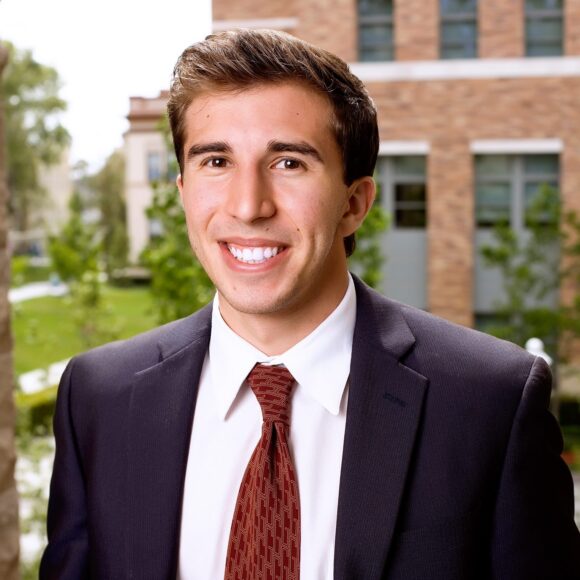
When Adam Kalawi ’14 first arrived at Chapman University, he did not walk onto campus searching for a direction. He came with a goal he had held since childhood: to become a doctor.
Kalawi was the fourth of his siblings to attend the university, and his earliest memories of campus go back to tagging along during summers when his sister worked at Camp Chapman, a previous on-campus summer camp for kids.
Even before he enrolled, Kalawi experienced the kind of personal support he would later describe as Chapman’s defining strength. In eighth grade, while working on a science fair project about how soda and juice erode teeth, a Chapman biochemistry professor heard about his project through Kalawi’s sister. The professor offered him an old pH meter and supplies to borrow.
“I can’t think of a lot of other places that would be so in tune with their students’ needs that they weren’t just aware of the students themselves, but let alone their family,” Kalawi said. “It’s simply amazing how much these professors care.”
A Campus Big Enough to Explore, Small Enough to Lead
At Chapman, Kalawi majored in biochemistry and molecular biology, joining one of the first cohorts in the program. He also enrolled in the University Honors Program, balancing intensive science coursework with interdisciplinary seminars designed to build broader thinking and communication.
He also kept just as active outside the classroom. Kalawi served on the Orientation Team every year as an orientation assistant and later as orientation coordinator. He participated in Greek life and held an executive board role in his fraternity. He also stayed connected to STEM communities through the American Chemical Society and other science organizations. He also worked as both a tutor and supplemental instructor in the Center for Excellence in Teaching and Learning.
For Kalawi, Chapman’s size made that level of involvement possible.
“It’s a big enough student body to have a very robust student life, but it’s also a small enough student body where you’re able to try a lot of different activities,” he said. “And so, the ability to kind of be involved in all these things really inspired me to snowball into getting more and more involved throughout the campus.”
True Access to Learning
Kalawi credits Chapman’s faculty culture as the clearest reason he felt confident in his choice of school. He describes a campus where professors knew students well, supported them personally, and helped them identify their next steps, not just academically but professionally.
“The depth at which the professors know their students, and the lengths that they’re willing to go to support their students, is the key differentiator,” he said.
The mentorship he received also translated into early access to research experiences. Kalawi recalls spending long stretches in labs running biochemical procedures independently; the kind of autonomy he says undergraduates do not always receive elsewhere.
“As an undergrad, you get to have a lot of research experiences that are typically reserved for the graduate or even PhD level,” he said. “Truly a huge bonus to my education.”
Learning to Think Like a Physician
Kalawi says Chapman prepared him in a practical way that became clear once he moved beyond undergraduate coursework and into professional training. Many of his exams were written responses rather than multiple choices, requiring him to demonstrate true understanding and apply concepts in new situations.
“I found that I came out of Chapman with a much deeper mastery and ability to wield material in my domain,” he said.
That skill, he added, mirrors the reality of medicine.
“No patient walks in the door and says, I either have A, lupus, or B, migraines,” Kalawi said. “They come in with a wide array of complaints, and your job is to distill the history down to salient points and come up with a meaningful assessment that drives your plan.”
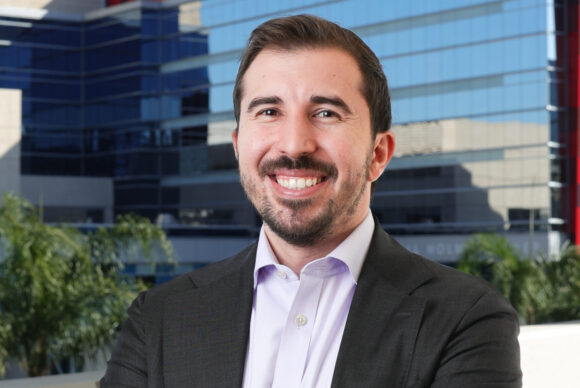
Today, Kalawi is a pediatric neurologist, providing care for children with medical disorders of the brain, including epilepsy, developmental disorders, congenital malformations, and genetic conditions. He also serves as an assistant professor of pediatrics and neurology at the University of California, Irvine School of Medicine.
“It is truly amazing to me that I get to study the most dynamic object in the universe, the human brain, during its most dynamic time, childhood,” he said.
In addition to clinical care, he is deeply involved in medical education and mentoring. He co-directs a summer internship program at Rady Children’s that brings high school and college students into the hospital for an immersive introduction to medicine. He also serves as associate program director for the child neurology residency program, helping train future specialists. The impact of education, he says, is what extends his reach farthest.
“I’m only one person, and I can’t do it all,” Kalawi said. “So, my role in education, I think, is probably my most meaningful because of the lives these future doctors can help and change down the line.”
Looking back, Kalawi describes his path as a combination of preparation and opportunity. Chapman, he says, gave him both, but only because he was willing to take the leap and put himself in the rooms where opportunities exist.
“Eighty percent of the battle for most things is just showing up,” Kalawi said. “And you’ll always be surprised at how much you’re able to accomplish just by showing up and being yourself.”